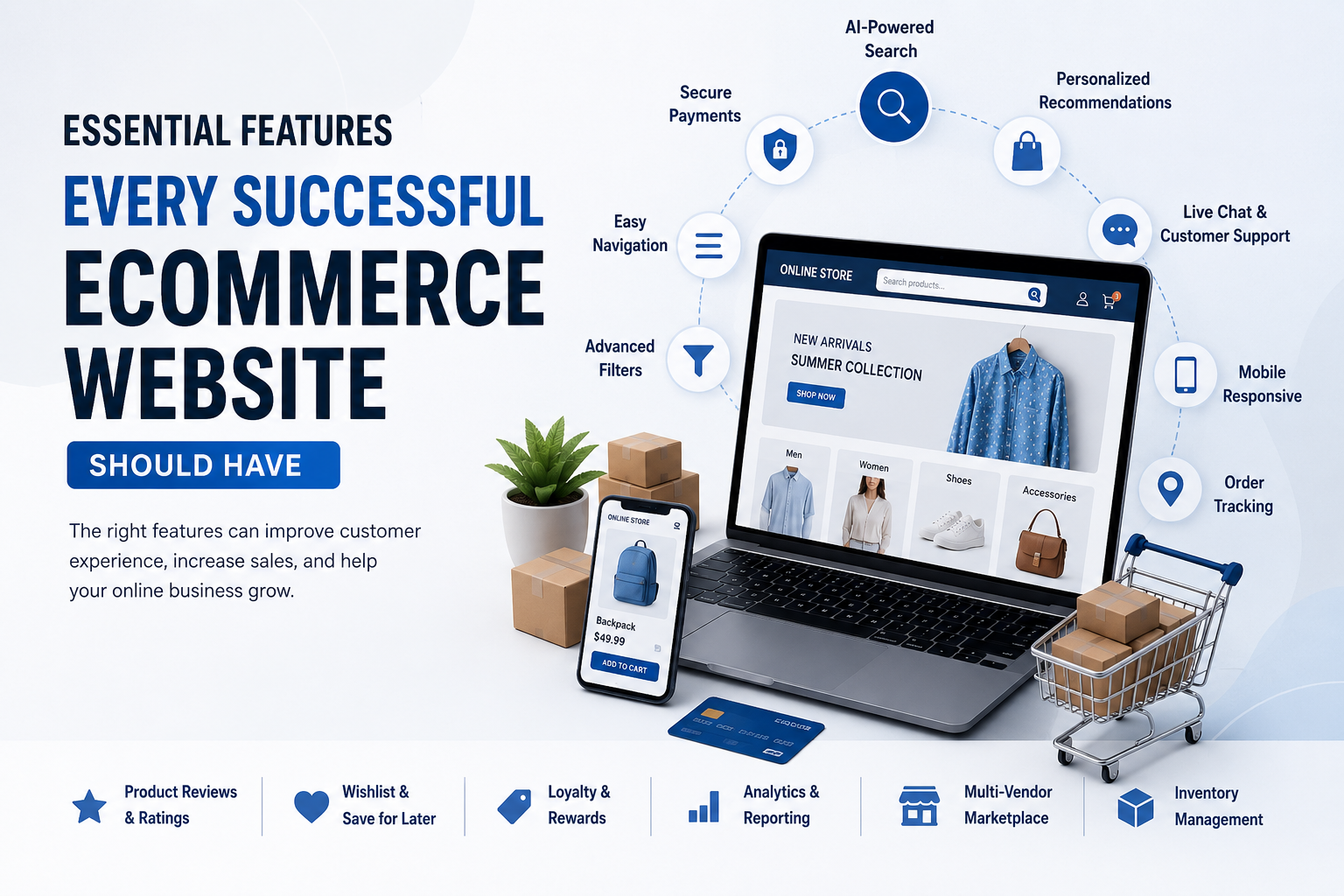
Essential Features Every Successful eCommerce Website Should Have
Introduction
The eCommerce industry has transformed the way consumers shop, making convenience, speed, and personalization the foundation of a successful online business. Whether you’re launching an online supermarket, electronics store, fashion retailer, pharmacy, furniture store, or a multi-vendor marketplace, the features you include on your website can directly influence customer satisfaction, sales, and long-term growth.
Today’s customers expect more than just a product catalog. They want intuitive navigation, secure payments, personalized shopping experiences, and seamless customer support across multiple devices. Businesses that invest in the right eCommerce features are better equipped to attract new customers, retain existing ones, and stay ahead of the competition.
In this article, we’ll explore the essential features every successful eCommerce website should have and how they contribute to business success.
1. User-Friendly Navigation
A well-structured website allows customers to find products quickly and effortlessly. Clear product categories, intuitive menus, and logical navigation improve the overall shopping experience and reduce frustration.
Best Practices:
- Organized product categories
- Mega menus for large product catalogs
- Breadcrumb navigation
- Sticky navigation bar
- Quick access to popular categories
2. Advanced Product Search and Smart Filters
Customers should never struggle to locate a product.
An advanced search function combined with intelligent filters enables users to search by:
- Product name
- Brand
- Category
- Price range
- Size
- Color
- Availability
- Customer ratings
AI-powered search can even understand spelling mistakes, synonyms, and customer intent, delivering faster and more accurate results.
3. AI-Powered Product Recommendations
Personalization has become one of the most valuable features in modern eCommerce.
Artificial Intelligence analyzes customer behavior, browsing history, and previous purchases to recommend products that match individual preferences.
Common recommendation sections include:
- Recommended for You
- Frequently Bought Together
- Customers Also Bought
- Similar Products
- Recently Viewed Items
These recommendations increase customer engagement and encourage larger purchases.
4. High-Quality Product Pages
Your product page serves as your digital salesperson.
Each product should include:
- High-resolution images
- Multiple viewing angles
- Zoom functionality
- Detailed product descriptions
- Specifications
- Stock availability
- Delivery information
- Customer reviews
Clear and informative product pages build customer confidence and reduce return rates.
5. Secure and Flexible Payment Options
A secure checkout experience is essential for earning customer trust.
Offer multiple payment methods such as:
- Credit and Debit Cards
- Digital Wallets
- Online Banking
- Cash on Delivery
- Buy Now, Pay Later (where available)
Displaying trusted payment security badges also reassures customers that their transactions are protected.
6. Fast and Simple Checkout Process
A lengthy checkout process is one of the leading causes of cart abandonment.
An optimized checkout should include:
- Guest Checkout
- Address Auto-fill
- Saved Payment Methods
- One-Page Checkout
- Progress Indicators
- Multiple Delivery Options
The fewer steps involved, the higher the chances of completing a purchase.
7. Mobile-Responsive Design
With a significant percentage of online purchases made via smartphones, every eCommerce website should deliver a seamless mobile experience.
A mobile-friendly website should offer:
- Responsive layouts
- Fast loading speeds
- Touch-friendly navigation
- Mobile payment compatibility
- Optimized product images
A consistent experience across devices ensures customers can shop anytime and anywhere.
8. AI Chatbot and Live Customer Support
Customers appreciate immediate assistance when shopping online.
AI-powered chatbots can help answer common questions related to:
- Product availability
- Order status
- Delivery estimates
- Return policies
- Promotions
When more complex support is needed, conversations should transition smoothly to a live customer service representative. This combination improves response times while reducing operational costs.
9. Customer Reviews and Ratings
Social proof plays a significant role in purchasing decisions.
Allow customers to:
- Rate products
- Write detailed reviews
- Upload photos
- Share purchasing experiences
Verified customer reviews build credibility and help new buyers make informed decisions.
10. Wishlist and Save for Later
Not every customer is ready to purchase immediately.
Wishlist functionality allows users to:
- Save favourite products
- Compare items later
- Return for future purchases
- Receive notifications about discounts or stock updates
This feature helps convert future visitors into loyal customers.
11. Real-Time Order Tracking
Transparency throughout the delivery process enhances customer satisfaction.
Customers should be able to:
- Track their orders
- Receive shipping notifications
- View estimated delivery dates
- Access delivery confirmations
Real-time tracking reduces customer inquiries and improves trust in your service.
12. Loyalty Programs and Rewards
Rewarding repeat customers encourages long-term engagement.
Popular loyalty features include:
- Reward points
- Cashback offers
- Membership tiers
- Referral programs
- Birthday discounts
- Exclusive member promotions
Customer retention is often more cost-effective than acquiring new customers, making loyalty programs a valuable investment.
13. Inventory Management and ERP Integration
Accurate inventory management ensures customers only purchase products that are actually available.
Integrating your eCommerce platform with inventory or ERP systems helps:
- Synchronize stock levels
- Prevent overselling
- Automate inventory updates
- Streamline warehouse operations
- Improve order fulfillment
This integration is especially important for businesses managing thousands of products.
14. Multi-Vendor Marketplace Capabilities
Many businesses are expanding beyond traditional online stores by allowing multiple vendors to sell through a single platform.
Marketplace functionality can include:
- Vendor registration
- Individual vendor dashboards
- Commission management
- Product approval workflows
- Independent inventory management
- Sales reporting
This model enables businesses to expand their product offerings while creating additional revenue streams.
15. Analytics and Business Intelligence
Data is one of the most valuable assets for any online business.
Comprehensive analytics help businesses monitor:
- Website traffic
- Customer behaviour
- Best-selling products
- Conversion rates
- Cart abandonment
- Sales trends
- Marketing performance
These insights enable informed decision-making and continuous improvement.
Why These Features Matter
Every feature within an eCommerce platform contributes to the customer journey. From helping shoppers discover products more efficiently to providing secure payment options and personalized recommendations, these capabilities work together to create a seamless shopping experience.
Businesses that invest in customer-centric features not only improve satisfaction but also increase conversions, encourage repeat purchases, and build long-term brand loyalty.
Final Thoughts
Launching an eCommerce website is only the first step. Long-term success depends on providing an engaging, secure, and convenient shopping experience that meets evolving customer expectations.
Whether you’re operating a supermarket, electronics retailer, fashion brand, pharmacy, or multi-vendor marketplace, incorporating essential features such as AI-powered search, personalized recommendations, secure payments, mobile responsiveness, live customer support, and advanced analytics can significantly improve business performance.
As customer expectations continue to evolve, businesses that embrace innovation and continuously enhance their digital shopping experience will be better positioned to attract customers, increase sales, and achieve sustainable growth.
Investing in the right eCommerce features today lays the foundation for a scalable, future-ready online business.



0 Comments