AI-Powered eCommerce in 2026: How Intelligent Shopping Experiences Are Increasing Online Sales
Introduction
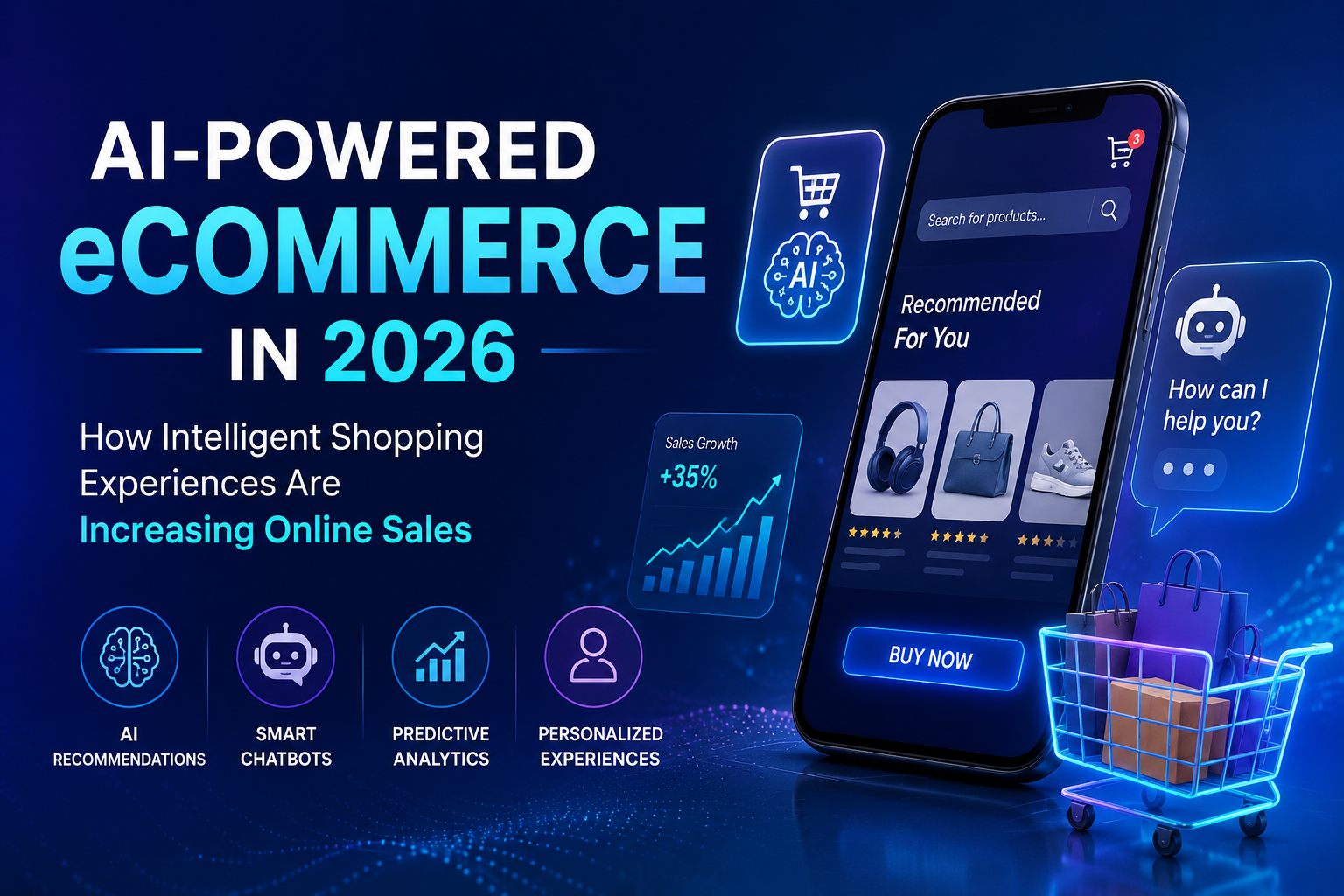
The eCommerce industry has entered a new era where artificial intelligence (AI) is no longer a futuristic concept—it’s a competitive necessity. In 2026, successful online stores are using AI to create personalized shopping experiences, automate operations, and help customers make faster purchasing decisions.
Today’s consumers expect more than just a functional online store. They want relevant product recommendations, instant support, personalized offers, and a seamless shopping journey across every device. Businesses that leverage AI are meeting these expectations while increasing conversions, customer loyalty, and revenue.
In this article, we’ll explore how AI is transforming eCommerce and why businesses should embrace intelligent shopping experiences to stay ahead of the competition.
What Is AI-Powered eCommerce?
AI-powered eCommerce refers to the use of artificial intelligence technologies—including machine learning, predictive analytics, natural language processing, and automation—to enhance every stage of the customer journey.
Rather than providing the same experience to every visitor, AI analyzes customer behavior, purchase history, browsing patterns, and preferences to deliver a highly personalized shopping experience.
The result is a smarter online store that understands customers and helps them find exactly what they need.
1. Personalized Product Recommendations
One of the biggest advantages of AI is its ability to recommend products based on customer interests.
Modern AI systems analyze:
- Previous purchases
- Browsing history
- Frequently viewed products
- Shopping cart behavior
- Similar customer preferences
- Seasonal buying trends
Instead of displaying random products, AI showcases items that customers are more likely to purchase.
Benefits
- Higher average order value
- Increased cross-selling opportunities
- Better customer engagement
- Improved conversion rates
For example, if a customer purchases a smartphone, AI can automatically recommend compatible accessories such as chargers, protective cases, earbuds, and screen protectors.
2. Smarter Search That Understands Customers
Traditional website search only matches keywords.
AI-powered search understands customer intent.
Customers can search naturally using phrases like:
- “Affordable laptops for students”
- “Comfortable running shoes”
- “Birthday gifts under $50”
AI recognizes spelling mistakes, synonyms, and context, helping shoppers find relevant products quickly.
This significantly reduces frustration while improving the overall shopping experience.
3. AI Chatbots That Sell Around the Clock
Modern AI chatbots have become intelligent shopping assistants rather than simple automated responders.
They can:
- Recommend products
- Answer customer questions instantly
- Track orders
- Explain return policies
- Suggest alternatives
- Assist during checkout
Since these assistants are available 24/7, businesses can provide continuous customer support without increasing operational costs.
4. Dynamic Pricing for Maximum Profitability
AI continuously analyzes market conditions and customer demand.
It considers factors such as:
- Competitor pricing
- Inventory levels
- Seasonal demand
- Customer behavior
- Sales performance
Using this information, businesses can adjust prices automatically to maximize profitability while remaining competitive.
This enables smarter pricing strategies without constant manual intervention.
5. Predictive Analytics for Better Business Decisions
AI doesn’t just analyze past performance—it predicts future trends.
Retailers can forecast:
- Best-selling products
- Seasonal demand
- Customer purchasing behavior
- Inventory requirements
- Sales opportunities
This helps businesses reduce overstocking, avoid stock shortages, and optimize purchasing decisions.
6. Personalized Marketing Campaigns
Generic marketing campaigns are becoming less effective.
AI allows businesses to deliver highly targeted promotions based on customer interests and shopping habits.
Examples include:
- Personalized email campaigns
- Product recommendations
- Cart abandonment reminders
- Special offers
- Loyalty rewards
- Location-based promotions
Relevant marketing improves customer engagement and significantly increases conversion rates.
7. Fraud Detection and Secure Transactions
Online security remains a major concern for both businesses and customers.
AI helps identify suspicious transactions by detecting unusual purchasing patterns in real time.
Benefits include:
- Reduced payment fraud
- Safer online transactions
- Faster fraud detection
- Greater customer trust
This creates a safer shopping environment while protecting business revenue.
8. Intelligent Inventory Management
Maintaining the right inventory levels is critical for every online retailer.
AI helps businesses:
- Predict demand
- Monitor stock levels
- Automate reordering
- Identify slow-moving products
- Optimize warehouse operations
Better inventory management reduces operational costs while improving customer satisfaction.
The Business Benefits of AI-Powered eCommerce
Organizations implementing AI often experience measurable improvements across multiple areas:
- Higher conversion rates
- Increased average order value
- Improved customer satisfaction
- Lower operational costs
- Better inventory management
- Faster customer support
- Increased customer retention
- Smarter marketing decisions
- More accurate business forecasting
As AI technologies continue to evolve, these benefits will become even more significant.
How to Begin Your AI eCommerce Journey
Businesses don’t need to rebuild their entire online store to benefit from AI.
A practical approach includes:
- Implementing AI-powered product recommendations
- Introducing intelligent website search
- Deploying AI chatbots for customer service
- Personalizing marketing campaigns
- Using predictive analytics for inventory planning
- Monitoring customer behavior to continuously improve user experiences
Starting with a few AI-driven features allows businesses to realize quick wins while building a foundation for future innovation.
Conclusion
Artificial intelligence is reshaping the future of online retail. From personalized recommendations and intelligent search to predictive analytics and automated customer support, AI enables businesses to deliver exceptional shopping experiences while improving operational efficiency.
As customer expectations continue to evolve, adopting AI is becoming a strategic investment rather than an optional enhancement. Businesses that embrace intelligent eCommerce today will be better positioned to increase online sales, strengthen customer relationships, and remain competitive in the rapidly changing digital marketplace.
Whether you’re launching a new online store or upgrading an existing platform, integrating AI-powered capabilities can help transform your eCommerce business into a smarter, more customer-centric operation.

0 Comments