The Rise of M-Commerce: Why Every Business Needs a Mobile Commerce Strategy in 2026
Introduction
The way people shop has changed dramatically over the past few years. Today, customers no longer wait until they are in front of a desktop computer to make a purchase. Instead, they browse products, compare prices, read reviews, and complete purchases directly from their smartphones.
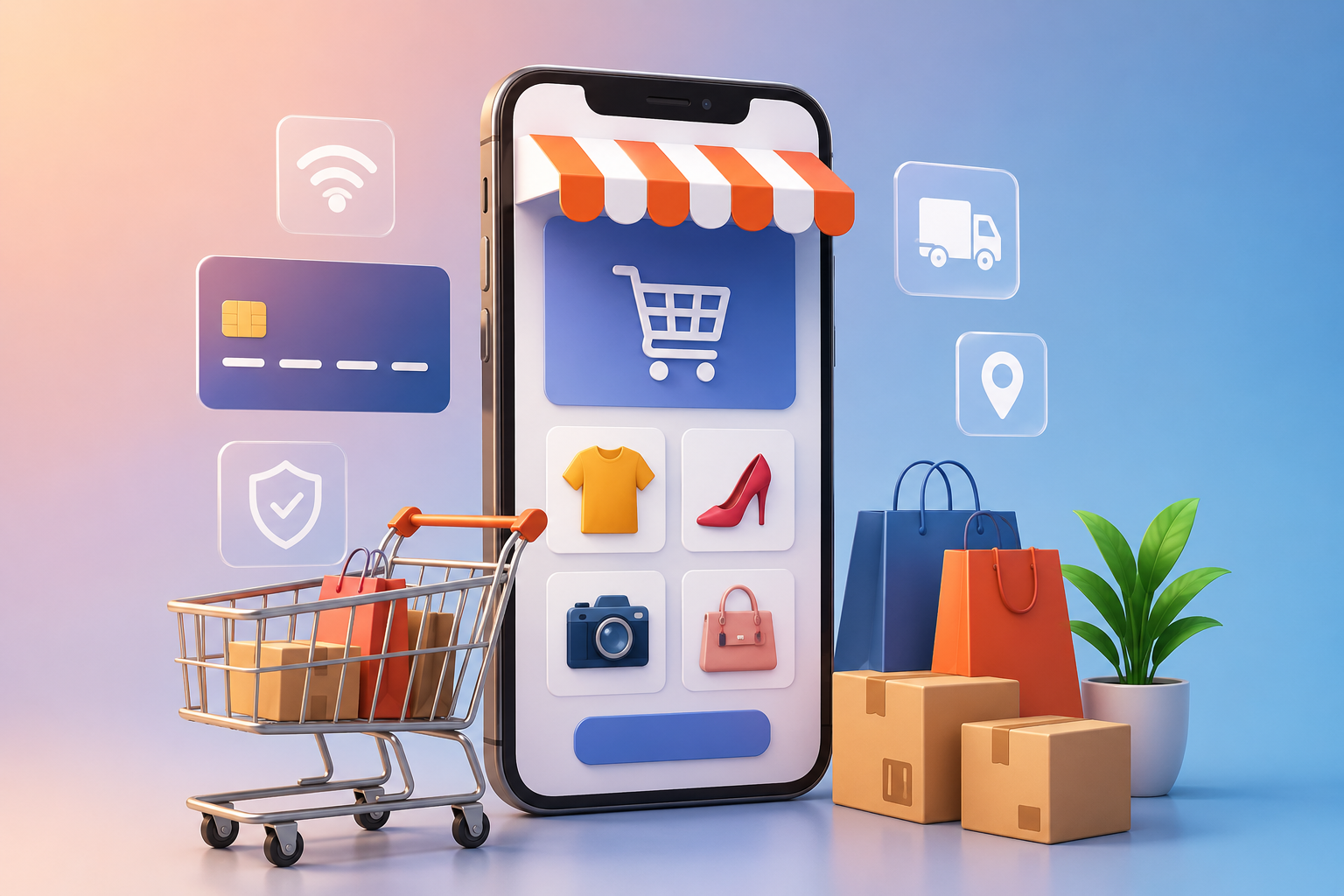
This shift has given rise to Mobile Commerce (M-Commerce)—a rapidly growing segment of eCommerce that enables consumers to buy products and services using mobile devices. With smartphone usage reaching record highs and mobile internet becoming faster than ever, businesses that fail to embrace m-commerce risk losing a significant portion of their potential customers.
Whether you’re a retailer, wholesaler, service provider, or enterprise brand, having a mobile-first strategy is no longer optional—it’s essential.
What is M-Commerce?
Mobile Commerce (M-Commerce) refers to any commercial transaction conducted through a mobile device such as a smartphone or tablet. It is a subset of eCommerce that focuses on providing customers with a seamless shopping experience on mobile platforms.
M-commerce includes:
- Mobile shopping
- Mobile banking
- Digital wallets
- Online ticket booking
- Food delivery
- Mobile payments
- Subscription services
- On-demand services
Customers can browse products, make payments, track orders, and communicate with businesses—all from their mobile devices.
Why M-Commerce is Growing So Rapidly
Several factors have accelerated the growth of mobile commerce:
1. Smartphone Adoption
Smartphones have become an everyday necessity. Millions of people use them as their primary device for internet browsing and shopping.
2. Faster Mobile Networks
The expansion of 4G and 5G connectivity has made online shopping faster and more reliable than ever.
3. Digital Payment Solutions
Payment gateways, digital wallets, Buy Now Pay Later (BNPL), and mobile banking have simplified the checkout process.
4. Social Commerce
Platforms like Facebook, Instagram, and TikTok encourage users to discover and purchase products directly from their mobile devices.
5. Convenience
Customers can shop anytime, anywhere—whether they’re commuting, relaxing at home, or travelling.
Benefits of M-Commerce for Businesses
Increased Sales
Customers spend more time on their mobile devices than on desktops. A mobile-friendly shopping experience increases the likelihood of conversions.
Better Customer Experience
Fast loading pages, simple navigation, and mobile-friendly interfaces help improve customer satisfaction.
Higher Conversion Rates
Optimized mobile checkout processes reduce cart abandonment and encourage faster purchases.
Greater Customer Reach
Businesses can connect with customers wherever they are, expanding their market beyond physical locations.
Improved Customer Engagement
Mobile apps and responsive websites allow businesses to engage customers through:
- Push notifications
- Personalized offers
- Loyalty programs
- Exclusive promotions
Essential Features of a Successful M-Commerce Platform
An effective mobile commerce solution should include:
Responsive Mobile Design
Your website should automatically adapt to all screen sizes for a smooth browsing experience.
Fast Performance
Every second counts. Faster websites improve user experience and search engine rankings.
Secure Payment Gateway Integration
Support multiple payment options such as:
- Credit & Debit Cards
- Digital Wallets
- Mobile Banking
- Buy Now Pay Later (BNPL)
Smart Search
Enable predictive search, filters, categories, and sorting options to help customers find products quickly.
Personalized Recommendations
AI-powered product recommendations improve cross-selling and increase average order value.
Wishlist
Allow users to save products for future purchases.
Order Tracking
Customers appreciate real-time updates on their purchases.
Push Notifications
Keep customers informed about:
- Promotions
- Discounts
- New arrivals
- Order status
- Flash sales
One-Page Checkout
A simplified checkout process significantly improves conversion rates.
Mobile App vs Mobile Website
Many businesses wonder whether they need a mobile app or a responsive website.
| Mobile Website | Mobile App |
|---|---|
| Accessible through browsers | Installed on customer devices |
| Lower development cost | Higher development investment |
| Easier to maintain | Richer user experience |
| SEO friendly | Push notifications |
| Instant access | Offline capabilities (limited) |
For many businesses, starting with a responsive mobile website is a cost-effective approach. As customer demand grows, investing in a dedicated mobile application can provide additional engagement and loyalty benefits.
Emerging Trends in M-Commerce
Artificial Intelligence
AI helps businesses deliver personalized product recommendations, chatbots, and smarter search experiences.
Voice Commerce
Voice assistants are making hands-free shopping increasingly popular.
Augmented Reality (AR)
Customers can virtually try products before purchasing, improving buying confidence.
Buy Now, Pay Later (BNPL)
Flexible payment options continue to drive higher conversions and larger average order values.
Mobile Wallets
Digital payment methods provide faster, more secure transactions.
Progressive Web Apps (PWAs)
PWAs combine the accessibility of websites with many of the features of native mobile applications.
Best Practices for Building a Successful M-Commerce Experience
- Design with a mobile-first approach.
- Optimize page loading speed.
- Use high-quality but compressed images.
- Simplify product navigation.
- Provide secure payment methods.
- Minimize checkout steps.
- Display customer reviews and ratings.
- Offer multiple delivery options.
- Enable guest checkout.
- Continuously monitor user behavior and optimize accordingly.
Challenges Businesses Should Consider
While m-commerce offers tremendous opportunities, businesses should also address potential challenges:
- Mobile security and data protection
- Device compatibility
- Network reliability
- App maintenance
- Payment security
- Customer privacy compliance
- Performance optimization
Addressing these challenges early helps create a secure and reliable shopping experience.
Why Businesses Should Invest in M-Commerce Today
Consumer behavior continues to shift toward mobile shopping. Customers expect fast, convenient, and secure experiences regardless of the device they use.
Investing in a robust mobile commerce platform enables businesses to:
- Increase online sales
- Improve customer satisfaction
- Strengthen brand loyalty
- Expand market reach
- Stay competitive in an increasingly digital marketplace
- Support future business growth
Conclusion
Mobile commerce is no longer just an emerging trend—it has become a fundamental part of modern retail and digital business. As consumers increasingly rely on smartphones for shopping, businesses must prioritize mobile-friendly experiences that are fast, secure, and user-centric.
Whether through a responsive website, a Progressive Web App, or a dedicated mobile application, investing in m-commerce empowers businesses to meet evolving customer expectations, boost conversions, and remain competitive in today’s digital economy. Organizations that embrace mobile commerce today will be better positioned to capture new opportunities and drive sustainable growth in the years ahead.
0 Comments